
How to prepare your yard for pool excavation: a Perth homeowner's guide
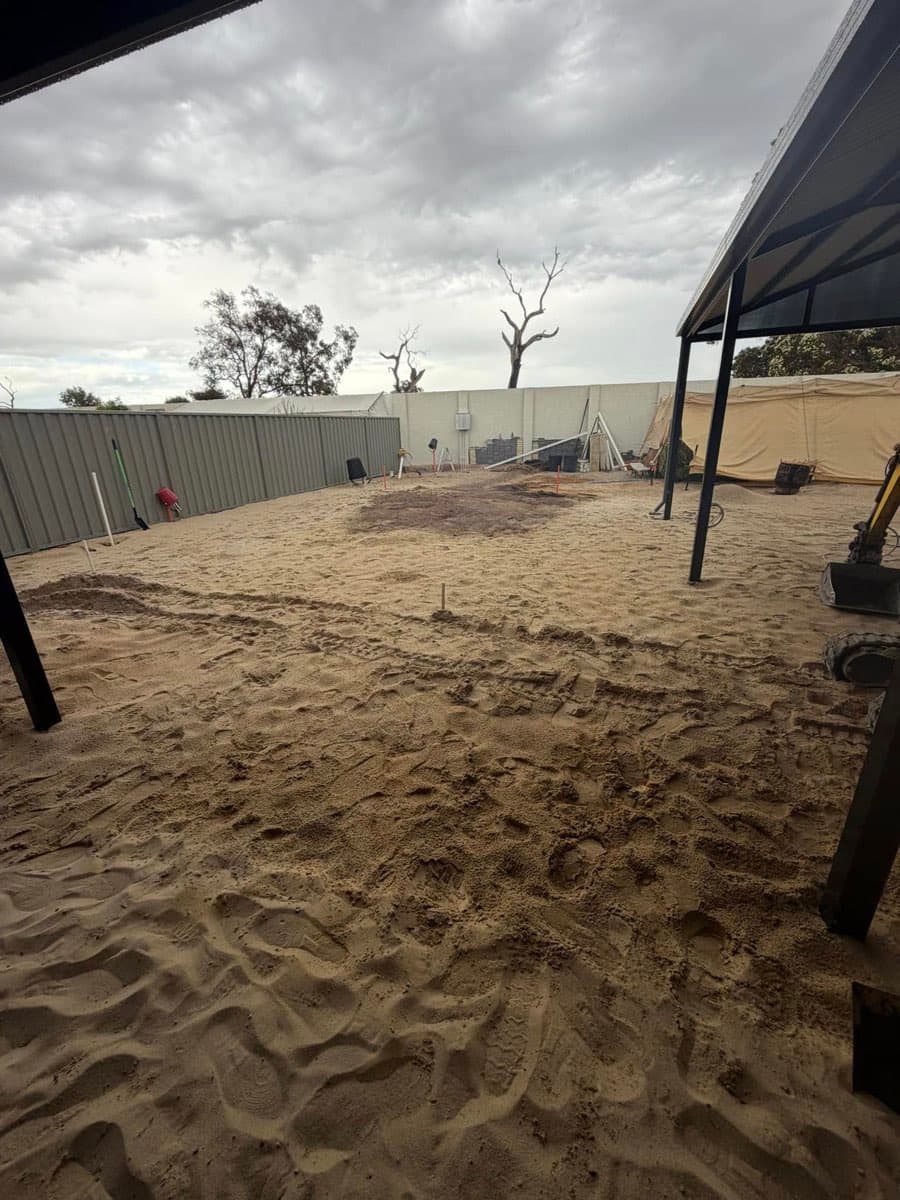
The dig itself takes a few days. The prep takes a couple of weeks if you do it right — and saves a fortune in surprises. Here's the homeowner's punch list we walk through with every Perth pool client before excavation day.
Step 1 — Dial Before You Dig (and don't skip it)
Sewer, water, gas, comms and stormwater all sit shallower than most people think on Perth blocks. Hit one with a bucket and you've got a serious repair bill, a service outage for the street, and a job that stops dead until it's fixed.
Lodge a Before You Dig referral at byda.com.au at least 5 business days before the dig. The plans tell us where the registered services run; we do an on-site cable locate as well before the first bucket drops. We handle the BYD lodgement on jobs we run — but on a builder-led dig, double-check who's got that ball.
Step 2 — Clear the access path
The access path is the bit of the yard the gear travels along. On dig day it needs:
- Gate width verified (we'll measure on the site visit, but spot-check the day before)
- No overhanging eaves, pergola corners, or low gutters that catch a boom
- No retaining wall edges within 300mm of the track line
- Side gate locks removed or keys handed over
- Air-con condensers, washing lines, gas bottles cleared of the path
If a gate is fixed shut with cement we'll need a week's notice to plan around it. A side gate that "doesn't open all the way" is the #1 thing that pushes a dig start by a day.
Step 3 — Move what's portable
Mini-excavator tracks are forgiving, but they're not magic. Pots, pavers, ornaments, outdoor furniture, kids' play gear, the trampoline — all that needs to be 2m+ clear of the path and the pit. Anything left in the work zone gets the "operator's discretion" treatment, which is usually "moved into a worse spot."
Worth photographing the yard before we arrive so you've got a reference for "what went where" on the way back.
Step 4 — Talk to the neighbours
A heads-up text the week before saves a phone call to the council a week later. Tell them:
- What dates the dig runs
- Approximate hours (we work Mon–Fri, 6am to 4pm)
- Whether the truck will be on the verge in front of their place
- Whether the fence is staying or coming down
- Your mobile number for any issues during the dig
We're as quiet as a tracked machine and a tipper gets, but it's not silent. A neighbour who knows what's happening usually shrugs. A neighbour who comes home to a truck blocking their drive and no warning usually doesn't.
Step 5 — Plan for spoil removal
Pool dig spoil is 60–80m³ of sand or clay. It has to go somewhere. Three options:
- Truck it out (most common). We bring the tipper, spoil leaves with us same day, dump fees included in the quote. No stockpile on your block.
- Stockpile on site. If you're regrading the yard and want to keep select fill, we can pile it where you want it. Needs space and council awareness.
- Re-use on the verge / garden beds. Sometimes the spoil is clean enough to spread. Council rules apply — don't dump on the verge without checking.
Whichever option you pick, agree it before dig day. The dig's a bad time to be deciding where 70 tonnes of dirt is going.
Step 6 — Get the engineer's spec to the excavator
The pool engineer's drawing tells us the dig depth, the shape, the batter angle, and any step-downs for benching or spas. We need it before the dig — ideally with the site visit, at the latest the day before excavation starts.
On a builder-led job, the pool builder usually passes it through. On a homeowner-led job (you're hiring the excavator direct and bringing in the form crew separately), it's on you to forward the drawings. We can't set out from "I'll send you the dims later" — and the next time we get the drawings is usually when something's been dug 100mm wrong.
Bonus: Perth winter weather
May to August in Perth, rain days happen. If your dig falls in that window, build in contingency:
- Expect 1–2 weather days lost across a 3–5 day tight-access dig
- Clay blocks (Mt Lawley, Inglewood, parts of Mt Pleasant) can need pumps
- Sand blocks usually drain fast and lose less time
- Pool builders booked tight — if your dig slips, your form crew may slip too
The fix isn't to avoid winter (it's actually the quieter season and your booking sits tighter). It's to plan for it.
Day-of checklist
The morning the dig starts, walk the yard with the operator. Two minutes saves hours.
- Confirm the pit setout against the engineer's drawing
- Point out any sprinklers, soft spots, or recent landscaping
- Show where the closest tap is (for dust suppression)
- Confirm where the spoil tipper will park
- Swap mobile numbers and walk back inside
From there the crew runs the dig. Most homeowners check in once at lunchtime and again at knock-off. That's the right level of involvement.